

Black Friday and Cyber Monday are built to push you past capacity. Deeper offers, higher daily budgets, more aggressive promises. In health and wellness that often means a weight-loss programme, a hair protocol, a hormone consult, or a pharmacy SKU sold harder than the compounder and the care team can fulfil.
Overselling happens to almost everyone who scales at peak. Shipping blows out. Stock runs out. Inboxes drown. Patients get angry. On the surface that is operations. Under it, account health takes the hit: Feedback Score drops, HiVA can move down a tier, penalties stack, and Meta starts treating the ads as lower quality. CPMs rise. Traffic gets worse. Scale hits a ceiling that creative will not lift.
What actually damages the account
The oversell is not the injury. The experience after it is. Promised 2–4 day shipping or “in time for the holiday” while orders sit. Product or a consult that does not match the ad. Support that replies in templates three days late. Returns and refunds that are hard to find, so people file chargebacks and report the ad instead. Cards declining mid-spike, which Meta reads as payment risk.
Angry patients leave comments, click report, score the post-purchase survey low, and dispute the charge. Meta links that behaviour back to the Page, the domain, the pixel, and the ad account — the same stack a certified brand needs intact in January.

How it shows up in delivery
Buyers still think performance is targeting, bids, and creative. Meta also scores what happens after the click. Did the buyer get what was promised. Was shipping and support acceptable. Did they complain, refund, or dispute.
Low scores mean cheaper, worse audiences and higher CPMs. High scores mean better traffic. Scale fails in a specific way: you raise budget and nothing happens, or performance falls apart as soon as spend pushes. That is an algorithmic trust limit, not a “bad patch.”
Three levers sit behind it. Feedback Score, 0–5: below about 2, delivery is restricted; near 1 you can lose the ability to advertise. HiVA — High Value Asset — Meta's internal tier on the Business Manager, ad accounts, Pages, pixels and profiles: Bronze through Platinum, not shown in Ads Manager, but it sets auction priority and how much scrutiny you get. Then the flags: payment limits, ACE-style warnings, old restrictions that never fully clear.
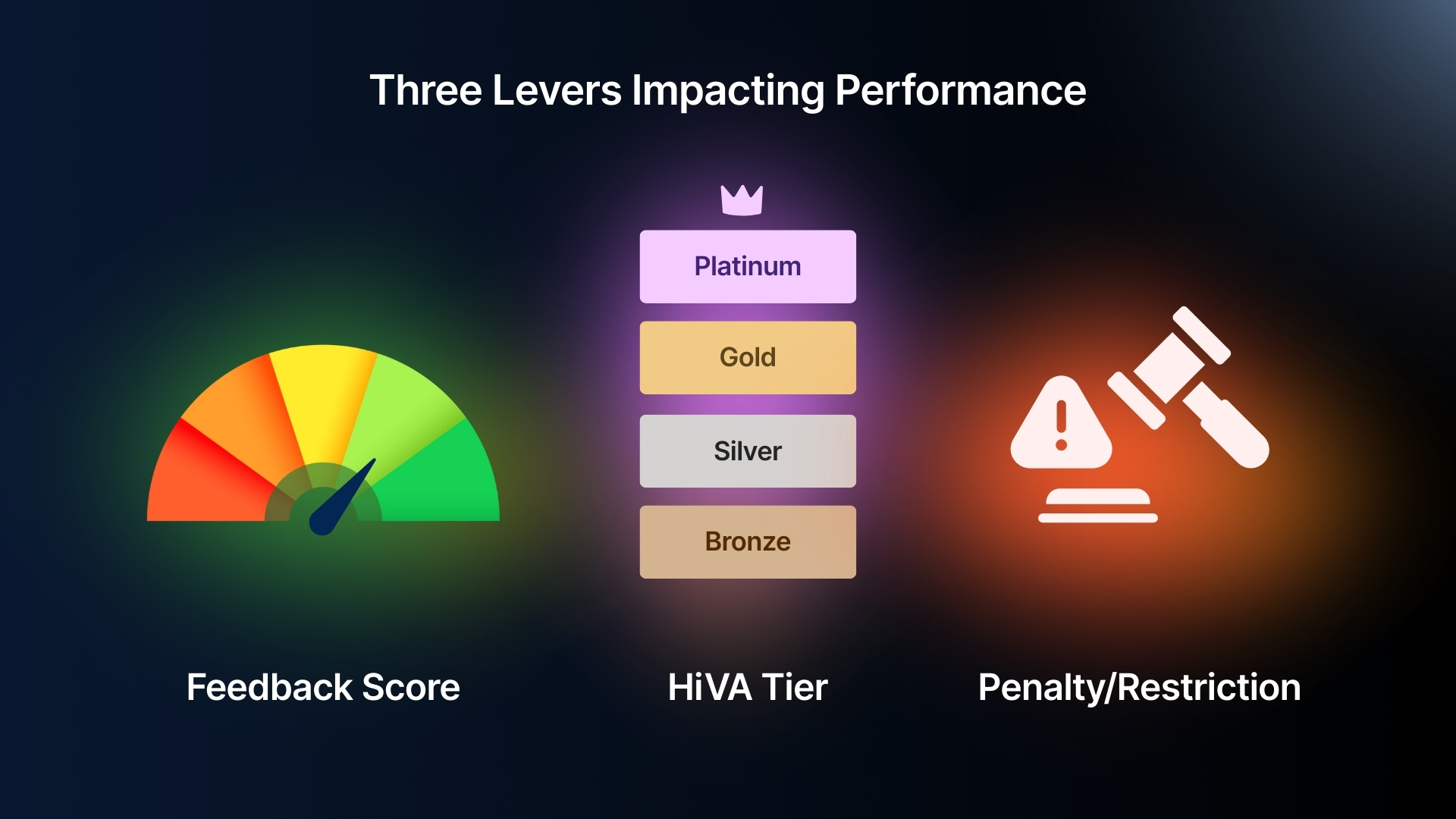
The damage is cumulative. One messy peak can sit on the assets well into the next year.
Fix patients first, then the stack
Reset expectations before people are furious: a clear email with real timelines, an honest banner, an updated FAQ. Prioritise the oldest orders, the best patients, and anyone already chasing you — those are the surveys and the chargebacks. Where you clearly failed, make it right with a partial refund, a credit, or a replacement. Every calmed patient is one fewer negative signal on the account.
The account side is mostly invisible. You can see Feedback Score. You cannot see HiVA, payment risk, or soft throttles. Guessing with new creative while the trust layer is damaged is how brands spend December fixing the wrong thing.
Spinning up a fresh Business Manager is usually the worst option. Meta connects people, payment methods, domains, and business details. You also throw away the legitimate history you do have. Repair the stack you already own. If that stack was a cold health account to begin with, peak week is often when the gap versus platinum infrastructure becomes obvious — not because platinum magically fulfils orders, but because a trusted account is slower to treat a messy week as fraud.
Overselling happens. What decides whether it is a rough week or a year of expensive traffic is what you do in the fortnight after.