

When Meta ads start underperforming with no obvious cause — high CPMs, poor traffic, results falling over — one of the hidden numbers in play is HiVA. Meta does not put it in Ads Manager. It still ranks every asset you run.
HiVA stands for High Value Asset. It is an internal trust rating on the advertising stack: each ad account, Business Manager, Page, and even individual creatives can carry its own classification. The visible ladder is Platinum, Gold, Silver, Bronze. Most advertisers sit in Bronze or Silver. Gold is genuinely trusted. Platinum is rare, and it is the tier Scoreify's accounts are built around for certified health brands.
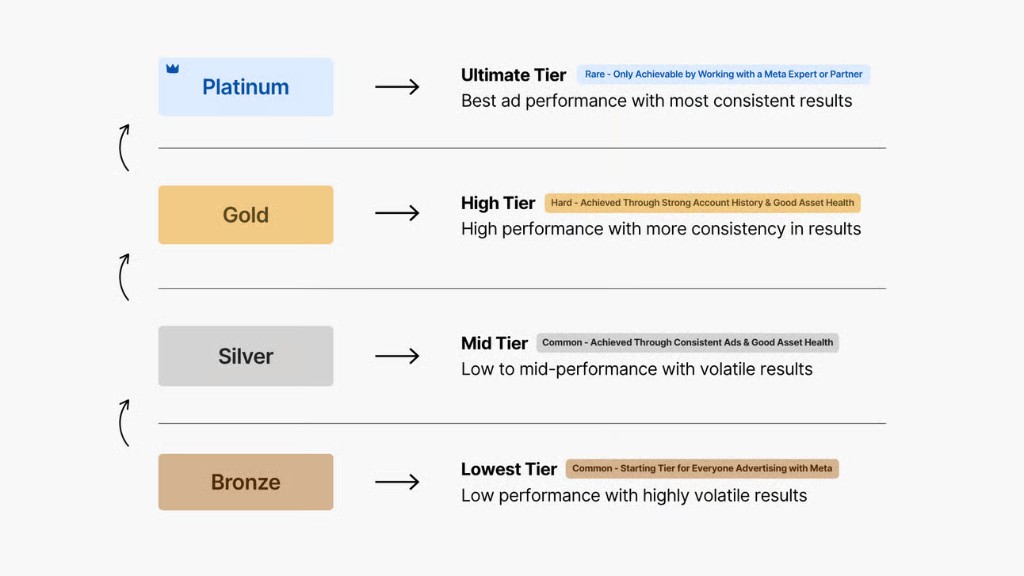
These rankings gate auction priority and delivery. Gold and Platinum get smoother delivery and easier scale. Bronze picks up hidden throttles and extra scrutiny that can wipe out good creative and precise targeting — which is exactly the situation a LegitScript-certified clinic finds itself in on a cold account.
What moves the tier
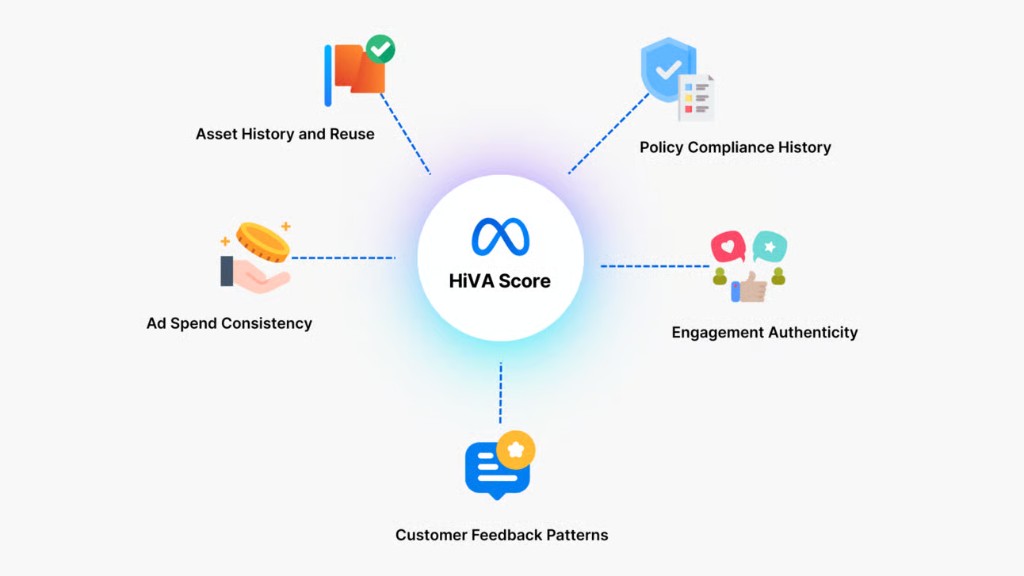
Policy history is sticky. Rejections, restrictions, and Page quality hits stay on the record long after the original issue is “resolved.” Customer feedback, chargebacks, and bad post-purchase patterns tell Meta the business may not be legitimate — a serious problem when your category already overlaps prohibited medical ads. Recycled or previously owned assets look suspicious. Fake engagement hurts more than quiet genuine comments. Erratic spend and sudden budget spikes read as risk.
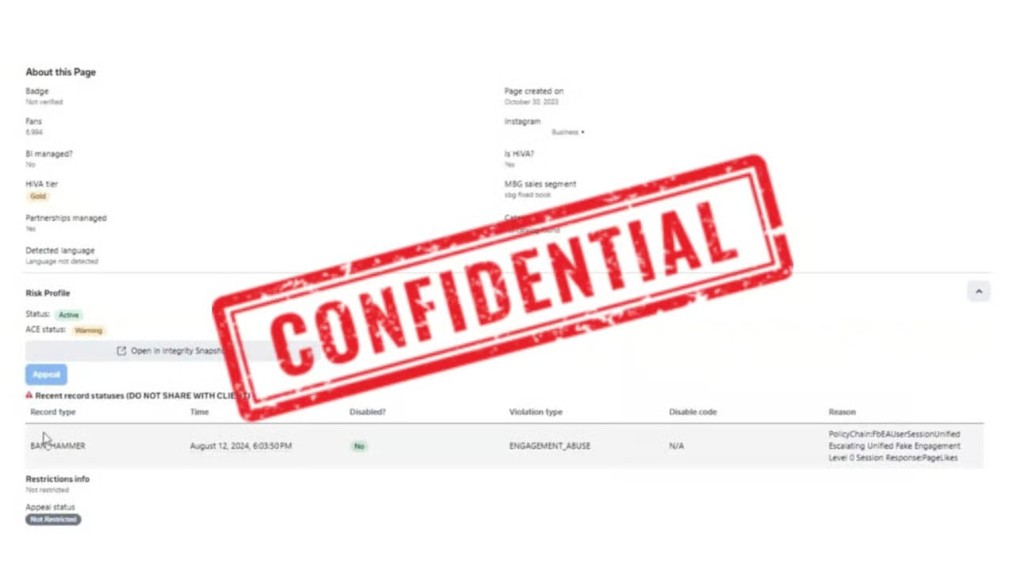
Each asset has its own tier. The ad account can be Silver while the Business Manager is Bronze and the Page is Gold. You will not get a notification when any of them move. You notice Learning Limited that will not clear, delivery that slows despite strong metrics, flags without a clear violation, and scale that breaks as soon as you push spend. Silver still has occasional friction. Gold and Platinum rarely do.
Why it stays hidden
If advertisers could see the rank, they would game the rank. Meta would rather change your behaviour without a dashboard. That is why a health brand can follow every public best practice and still feel capped: the cap is not in the campaign. It is on the asset.
Improving a Bronze health account inside the same Business Manager is slow, because the history travels with it. Maintaining a high tier means staying inside policy, keeping feedback clean, and not treating the account as disposable. Dropping a tier is easier than climbing one.
Why it matters more in regulated health
Two Meta advertisers can run the same offer in regulated health. Same creative quality. Same audience targeting. Same offer page. One pays $20 CPMs. The other pays $80. The difference isn’t anything you can measure in Ads Manager. It’s the HiVA-tier of the account underneath.
A Bronze HiVA-tier hurts any advertiser. In regulated health, it is catastrophic. Since Meta’s January 2025 healthcare reclassification, the category lost access to most lower-funnel conversion signals. Purchase, Add to Cart, and Subscribe data is blocked or stripped before the auction sees it. With less outcome data on your campaigns, Meta leans harder on the other signals it has to decide whether to trust you. HiVA-tier is the biggest of those signals.
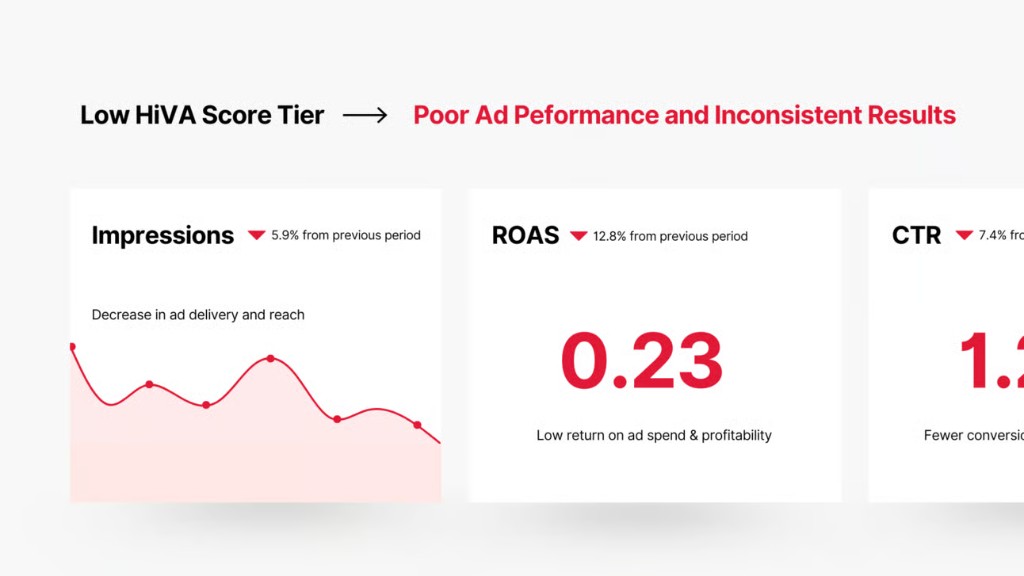
Two accounts running the same offer, same audience, same creative will see different CPMs, different CPAs, and different ROAS — solely because of where they sit in Meta’s trust classification. The lower-trust account pays more for the same impression. Standard healthcare advertisers are paying that penalty whether they know it or not.
Why getting to Platinum on your own is hard
Three reasons most operators in this category never reach Platinum.
The score is invisible. You can’t optimise a score you can’t see. If you guess wrong about which signal is the active drag, you spend a quarter optimising the wrong variable.
It is asset-level, and inherited. Your ad account can be Gold while your Business Manager is Bronze. The lowest score in the structure caps performance for everything attached to it. Adding a clean asset to an existing ecosystem drags the new asset down inside 30 to 90 days.
Recovery is asymmetric. Downgrades happen fast. Upgrades require sustained clean signal, policy escalation paths, and access to review systems most operators don’t have. The operators running at Platinum in this category are running on infrastructure that was already there.
This is the practical difference between “we opened a Meta account” and “we are running on platinum infrastructure.” The ads can be identical. The internal rank is not. For a certified GLP-1, telehealth, or pharmacy advertiser, that rank is often the reason two brands with the same creative see two different CPMs.